
mowlark
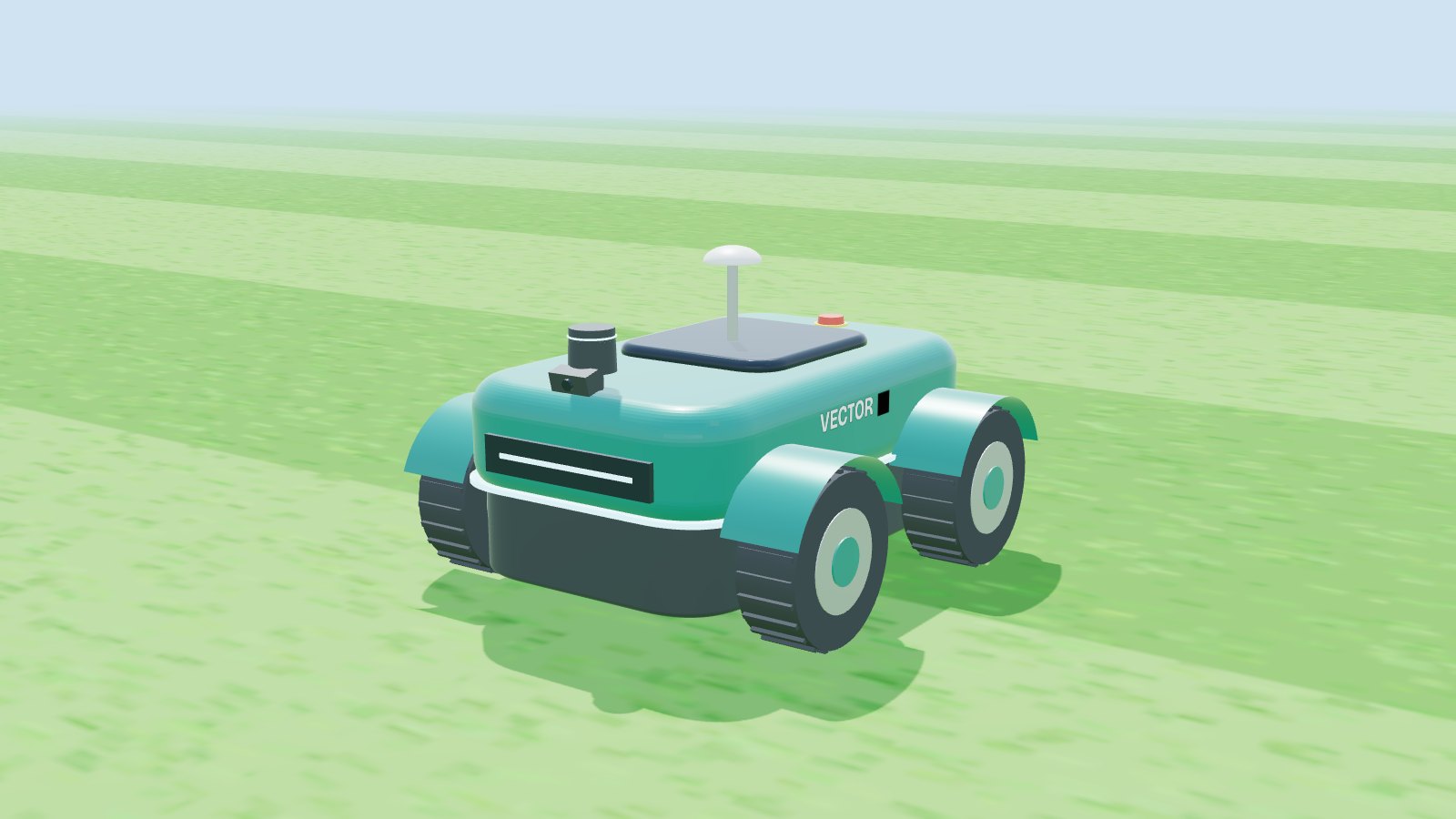
3D render of Vector on a lawn

Vector

Four-wheel drive for rough ground.

GEN 2 32kg 3D render of Vector

Vector

Brawler

Four-wheel drive for rough ground.

Concept · simulated4-wheel skid-steer
  • Cut46 cm
  • Top speed0.60 m/s
  • Peak rate994 m²/h
  • Range1,000 m²
  • Climb20°
  • Agility112 cm turn
  • Sight75 cm blind
  • Cost≈ $2.5k

Special Four driven wheels climb roots, molehills and bumps a caster would catch on.

Weakness Turning on the spot scrubs all four tyres: more power, more turf wear.

✔ Smoke test passed · 99.2%Full specs →

Gen 2 · Brawler · Concept. Simulated.

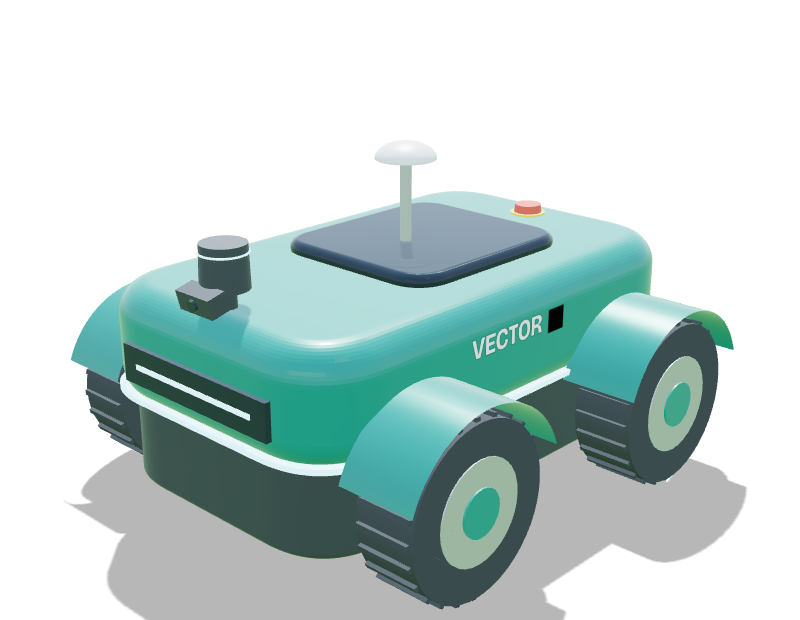
An 82 × 74 cm skid-steer robot on four hoverboard hub motors, with a 46 cm blade between the axles. Four driven wheels climb roots and molehills a caster would hang up on. Skid-steer turns by scrubbing its tyres sideways, so it uses more power in turns and its wheel odometry is worse: GNSS and the IMU matter more.

Vector is a concept: simulated, not built. Parts and prices are estimates, in US dollars (Nov 2026). Drawings are generated from the profile the simulator uses.

Body (L × W × H)82 × 74 × 42 cm
Mass≈ 32 kg
Drive4-wheel skid-steer, 26 cm wheels, up to 0.6 m/s
Blades46 cm → 46 cm cut
Battery10S 10 Ah ≈ 360 Wh
Stripe spacing41.4 cm (10% overlap)
Edge lap42 cm from the edge; uncut band ≈ 19 cm for the trimmer
Turning in place sweepsa 112 cm circle
3D lidar blind zone75 cm ahead of the nose
Margin at raised beds75 cm
Best forBumpy or uneven lawns up to ~1,200 m².
Slopesup to ≈ 20°

Drawings

◆ 3D lidar○ RTK GNSS antenna+ turning centre- - - blades
82 cm long × 74 cm wide
From above, nose to the right. Dashed blue: the circle the body sweeps turning in place round the + (its turning centre). Green band: the cut.
blind 75 cm42 cm tall
From the side. Dotted blue: the 3D lidar's lowest beam; anything 4 cm tall closer than that is unseen, so the stop field never shrinks below it.

Parts list

PartWhat it doesPriceSource
Aluminium extrusion frame + panelsChassis and blade guard≈ $150estimate
4 × hoverboard hub motors (two used hoverboards)Drive≈ $100–160estimate
2 × dual-channel BLDC controllers (CAN)Drive≈ $200–300estimate
BLDC blade motor + VESC-class controller with brakingCutting≈ $150estimate
10S Li-ion pack with BMS (~360 Wh)Power≈ $250estimate
Raspberry Pi 5 8 GB + SSD + coolerThe brain≈ $215–245Raspberry Pi list price
simpleRTK2B GNSS + antennaCentimetre positioning≈ $235ArduSimple
BNO085 IMUHeading and tilt$30Adafruit
Livox Mid-360 3D lidarSeeing obstacles$979list price
Pico 2 + safety partsThe hardware blade interlock≈ $100estimate
Total≈ $2,409–2,599

Build plan

  1. FrameExtrusion frame, motor mounts, blade guard.Test: Frame square within 3 mm; guard passes the probe test
  2. DriveHub motors and controllers on CAN; tune current limits.Test: Pivots on the spot on grass; odometry within 10% on a 10 m run
  3. Brain and sensorsSame stack, ROBOT=vector.Test: Smoke test passes on the real robot
  4. BladeBlade motor with braking; interlock first.Test: Blade stops within 2 s of the stop button
  5. SlopesClimb and traverse test on a marked slope.Test: Holds its line at 20° across the slope